
When it comes to choosing the perfect gemstone—whether for an engagement ring, wedding band, or everyday jewelry—shoppers are often faced with a big question: diamond or diamond vs moissanites ? With the rise of lab grown diamonds, the conversation has become even more interesting. Consumers now have ethical, affordable, and visually stunning options that weren’t widely available just a decade ago.
In this article, we’ll dive into the key differences between lab grown diamonds and diamond vs moissanites, helping you make an informed choice that aligns with your style, values, and budget.
Table of Contents
What Are Lab Grown Diamonds?
Lab grown diamonds, also called man-made or synthetic diamonds, are real diamonds created in a laboratory environment using high-tech methods that mimic the natural process. These diamonds are chemically, physically, and optically identical to mined diamonds.
Key Features:
- Made using HPHT (High Pressure High Temperature) or CVD (Chemical Vapor Deposition)
- Same hardness (10 on Mohs scale) and brilliance as natural diamonds
- Eco-friendlier and conflict-free
- Usually 30–50% more affordable than mined diamonds
What Is Moissanite?
Moissanite is a gemstone made from silicon carbide. Though it looks similar to a diamond at first glance, it is not the same mineral. Natural diamond vs moissanites is extremely rare, so almost all available moissanite is lab-created.
Key Features:
- Rating of 9.25 on the Mohs hardness scale (very durable, but not as hard as diamonds)
- More fiery brilliance (rainbow flashes under light)
- Significantly more affordable than diamonds and lab diamonds
- Not a diamond, but a diamond simulant
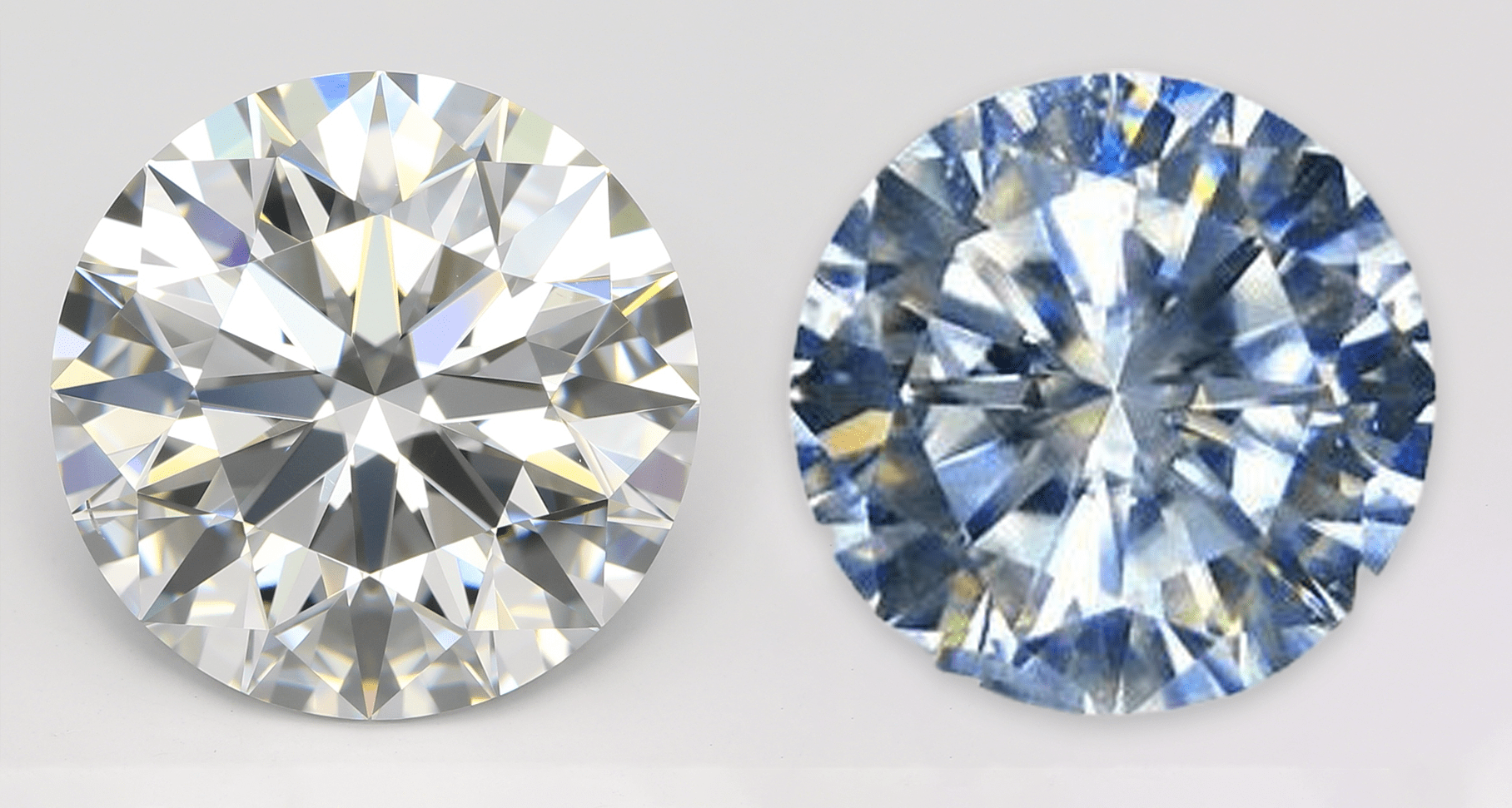
Visual Differences: Can You Tell Them Apart?
At a glance, most people cannot distinguish between a diamond vs moissanites vs moissanitesand a lab-grown diamond. However, there are subtle differences:
Price Comparison
Budget is often a major factor when choosing between these two stones. Here’s a rough comparison:
- 1-carat lab-grown diamond: USD $1,000–$2,000
- 1-carat moissanite: USD $300–$600
If you’re looking for something beautiful and durable at a lower price, moissanite may win. But if you’re after the authenticity and legacy of a real diamond, lab-grown offers the same prestige at a lower cost than mined stones.
Durability and Everyday Wear
Lab grown diamonds are harder and more resistant to scratching, making them ideal for daily wear—especially for rings and bracelets. Moissanite is also extremely durable and suitable for everyday use but may develop tiny scratches over many years.
Ethics and Sustainability
Both moissanite and lab grown diamonds are ethically produced in labs and free from the environmental degradation and human rights issues often linked with traditional diamond mining. This makes both options a smart choice for eco-conscious and socially responsible consumers.
Which Should You Choose?
Your decision ultimately comes down to personal preference and priorities:
- Choose lab grown diamonds if you want a real diamond at a better price, with the classic brilliance and prestige.
- Choose moissanite if you’re budget-conscious and love the extra sparkle without worrying about owning a true diamond.
Final Thoughts
In the battle of lab grown diamonds vs. moissanite, there’s no clear winner—only the choice that’s right for you. Both are ethical, beautiful, and modern alternatives to mined diamonds. Whether you’re choosing for love, style, or practicality, the good news is that you don’t have to sacrifice quality or conscience.
As technology and design continue to evolve, consumers are in a better position than ever to select gemstones that reflect both personal values and unique style.


More Stories
ESAC Design: A Modern Approach to Creative Digital Solutions
Jai Club Online Gaming Platform – Play & Earn Rewards
Daman Game Review: Explore Wingo, K3, 5D, Aviator & Color Prediction Games